Choose your day
Open a day to explore the programme.
-
Methodist Central Hall
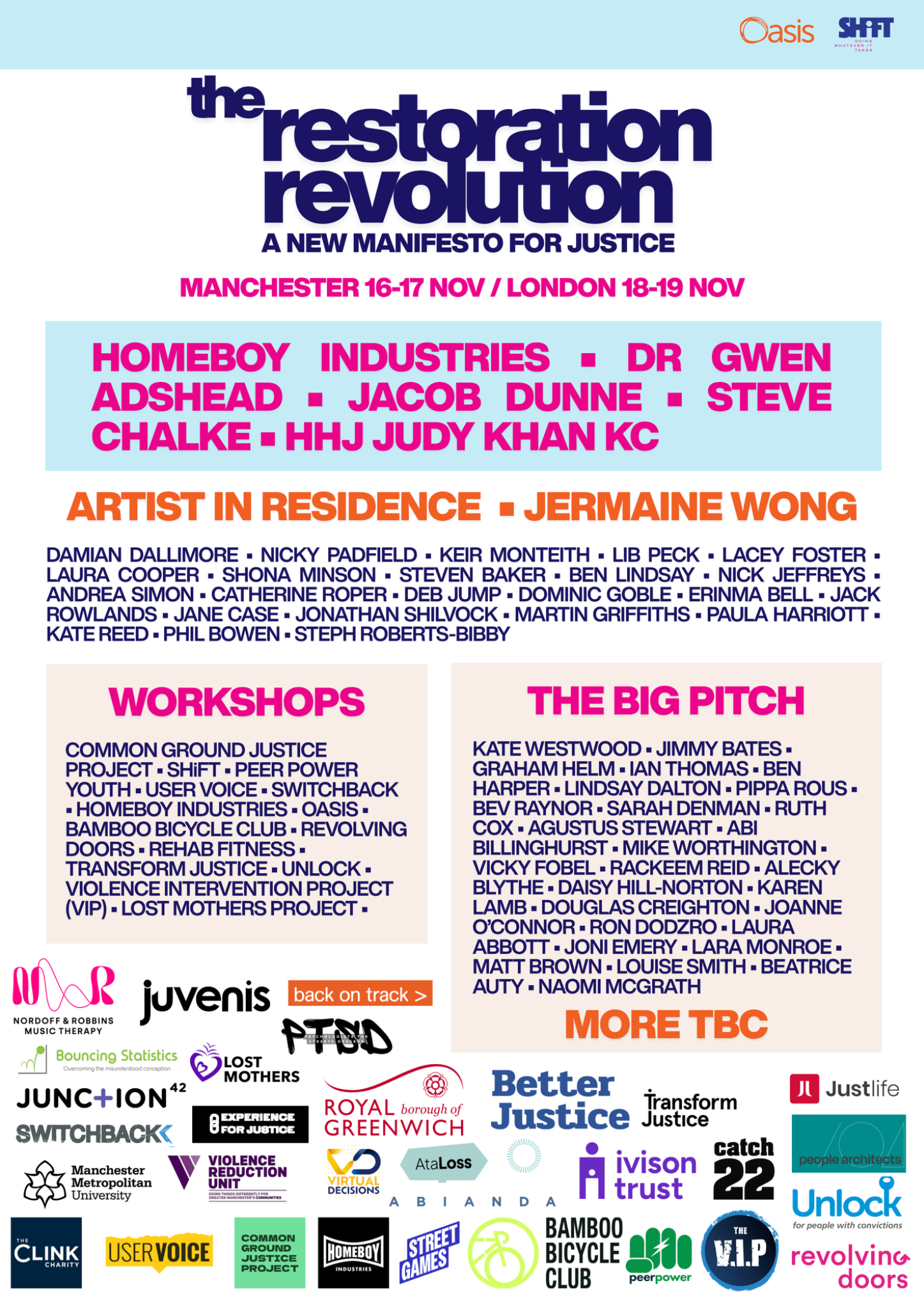
08:45–09:20 · Registration And Head, Heart, Hands (Arrival Activities)
09:30–09:40 · Welcome
Rev Steve Chalke MBE and Dr Amy Ludlow.
09:45–10:15 · Courtside With Judge Judy
Rev Steve Chalke MBE and HHJ Judy Khan KC.
10:15–11:00 · A New Manifesto For Justice With Homeboy Industries
Headline keynote setting the vision and challenge.
11:00–11:35 · Tea Break With NEMI Teas And Half The Story
11:45–12:45 · Preventing Harm Before It Happens Panel
What would it take to prevent serious harm before a young person reaches crisis point? Bringing together perspectives from community work, violence prevention and the justice system, this panel explores how services can recognise distress and build the trusted relationships that help keep children safe. For schools and education services, it asks how working together with families and communities can create lasting networks of support around children.
Chair: Damian Dallimore. Panellists: Steven Baker OBE, Prof. Erinma Bell MBE DL JP, Jane Case, Homeboy Industries and Leo Moran.
12:45–13:45 · Lunch And The Big Pitch
13:45–14:45 · Preventing Harm Workshops (Choose One)
Common Ground Justice Project: Winning The Argument: A Manifesto The Public Will Get Behind
Love & Power: Parent Panel
Description: What do parents need from the services involved in their children’s lives—and what needs to change? This parent-led conversation explores how schools and services can work differently and better with families, building trusted relationships and lasting networks of support around children. Spanning experiences that include school exclusion, SEND, care, youth justice, prosecution, the criminal justice system and custody, the panel asks what becomes possible when parents’ knowledge and experience help shape the response.
Keeping Children Safe Without Locking Them Up (Hilary Dixon)
Description: How can we keep children safe without depriving them of their liberty? This session with Hilary Dixon explores alternatives to custody, psychiatric detention and deprivation of liberty orders, asking what services could do differently to support children in their communities. It considers how trusted relationships and sustained support, including access to education, can help meet children’s needs before restrictive interventions become the response.
14:45–15:15 · Coffee Break
15:15–16:15 · Police, Prosecution And Courts Panel
Exploring problem-solving courts, restorative justice, child-centred policing and deferred prosecution.
Chair: Keir Monteith KC. Panellists: Lacey Foster, Jonathan Shilvock, Laura Cooper, Nick Jeffreys, Phil Bowen and Dr Deborah Jump.
16:15–16:40 · Day One Reflections
With artist in residence Jermaine Wong.
16:40–17:00 · Closing Remarks
Rev Steve Chalke MBE.
Provisional: room allocations and individual Big Pitch details to follow.
-
Methodist Central Hall
08:30–09:15 · Head, Heart, Hands (Arrival Activities)
09:20–10:15 · Welcome Back Followed By Dr Gwen Adshead
Chair: Dr Lorna Brookes.
10:15–11:15 · The Custodial System Workshops (Choose One)
The Workforce We Need To Transform Secure Care (Sam Fern)
Description: Supporting children in secure care is demanding, complex work. What do staff need to do it well—and to remain well themselves? Coordinated by Sam Fern, this session explores how we equip and support the workforce, from skills and professional development to working conditions and day-to-day support. It asks how investing in the people working with children can improve the care, relationships and opportunities those children experience.
Secure Care For 18–25-Year-Olds (Hilary Dixon)
Description: The transition from youth custody to the adult estate raises particular challenges for young people still making the move into adulthood. Chaired by Hilary Dixon, this session explores the needs of 18–25-year-olds within the secure estate and how support can better reflect this stage of their lives. It considers the role of education, employment and training in maintaining opportunities and helping young adults prepare for a successful future.
Changemaking In The Adult Secure Estate (Phil Wragg, Prof. Laura Abbott and Dr Dave Maguire)
11:15–11:45 · Tea Break With NEMI Teas And Half The Story
11:45–12:30 · Restoring Harm
Keynote from Jacob Dunne.
Chair: Tony Simpson.
12:30–13:30 · Lunch And The Big Pitch
13:30–14:30 · Reintegration And Rehabilitation Workshops (Choose One)
Homeboy Industries In Conversation
Build To Belong: Who Holds The Tools? with Bamboo Bicycle Club
Lived Experience, Community And Rehabilitation with Revolving Doors × Rehab Fitness
The FirstChecks Campaign with Paula Harriott and Penelope Gibbs
What Do We Need To Come Home? with Bilal Harry Khan (EDI workshop facilitator and youth worker) and Charlie Rigby (Founder & CEO, The Violence Intervention Project). Exploring shame, identity, relationships and belonging.
14:30–15:00 · Coffee Break
15:00–15:30 · A New Manifesto
Led by Jermaine Wong
15:30–16:30 · Closing Reflections
Chair: Dr Amy Ludlow.
Panellists: Rev Steve Chalke MBE, Dr Gwen Adshead, Jacob Dunne, Homeboy Industries and HHJ Judy Khan KC.
Provisional: room allocations and individual Big Pitch details to follow.
-
Oasis St Martin’s Village
08:45–09:20 · Registration And Head, Heart, Hands (Arrival Activities)
09:30–09:40 · Welcome
Rev Steve Chalke MBE and Dr Amy Ludlow.
09:45–10:15 · Courtside With Judge Judy
Rev Steve Chalke MBE and HHJ Judy Khan KC.
10:15–11:00 · A New Manifesto For Justice With Homeboy Industries
Homeboy Industries. Headline keynote setting the vision and challenge.
11:00–11:35 · Tea Break With NEMI Teas And Half The Story
11:45–12:45 · Preventing Harm Before It Happens Panel
What would it take to prevent serious harm before a young person reaches crisis point? Bringing together perspectives from community work, violence prevention and the justice system, this panel explores how services can recognise distress and build the trusted relationships that help keep children safe. For schools and education services, it asks how working together with families and communities can create lasting networks of support around children.
Chair: Lib Peck. Panellists: Paula Harriott, Ben Lindsay OBE, Jack Rowlands, Prof. Martin Griffiths CBE, Homeboy Industries, and Kate Reed.
12:45–13:45 · Lunch And The Big Pitch
13:45–14:45 · Preventing Harm Workshops (Choose One)
Common Ground Justice Project: Winning The Argument: A Manifesto The Public Will Get Behind
Love & Power: Parent Panel
Description: What do parents need from the services involved in their children’s lives—and what needs to change? This parent-led conversation explores how schools and services can work differently and better with families, building trusted relationships and lasting networks of support around children. Spanning experiences that include school exclusion, SEND, care, youth justice, prosecution, the criminal justice system and custody, the panel asks what becomes possible when parents’ knowledge and experience help shape the response.
Trusted Relationships As The Engine Of Harm Prevention (Prof. Kristine Langhoff and Becky Warnock)
Keeping Children Safe Without Locking Them Up (Hilary Dixon)
Description: How can we keep children safe without depriving them of their liberty? This session with Hilary Dixon explores alternatives to custody, psychiatric detention and deprivation of liberty orders, asking what services could do differently to support children in their communities. It considers how trusted relationships and sustained support, including access to education, can help meet children’s needs before restrictive interventions become the response.
Peer Power Youth Workshop
Description: What changes when young people lead the conversation about the services that affect their lives? Led by young people from Peer Power Youth, this workshop puts their experience and perspectives at the centre. It offers educators and other professionals an opportunity to consider how they listen, share decision-making and turn young people’s contributions into meaningful changes in practice.
14:45–15:15 · Coffee Break
15:15–16:15 · Police, Prosecution And Courts Panel
Exploring problem-solving courts, restorative justice, child-centred policing and deferred prosecution.
Chair: Prof. Nicky Padfield KC (Hon). Panellists: Dr Shona Minson, Catherine Roper, Steph Roberts-Bibby, Dominic Goble JP DL, Andrea Simon and Laura Cooper.
16:15–16:40 · Day One Reflections
With artist in residence Jermaine Wong.
16:40–17:00 · Closing Remarks
Rev Steve Chalke MBE. Bringing Day One together.
Provisional: room allocations and individual Big Pitch details to follow.
-
Oasis St Martin’s Village
08:30–09:15 · Head, Heart, Hands (Arrival Activities)
09:20–10:15 · Welcome Back Followed By Dr Gwen Adshead
Chair: Paula Harriott.
10:15–11:15 · The Custodial System Workshops (Choose One)
The Workforce We Need To Transform Secure Care (Sam Fern)
Description: Supporting children in secure care is demanding, complex work. What do staff need to do it well—and to remain well themselves? Coordinated by Sam Fern, this session explores how we equip and support the workforce, from skills and professional development to working conditions and day-to-day support. It asks how investing in the people working with children can improve the care, relationships and opportunities those children experience.
Secure Care For 18–25-Year-Olds (Hilary Dixon)
Description: The transition from youth custody to the adult estate raises particular challenges for young people still making the move into adulthood. Chaired by Hilary Dixon, this session explores the needs of 18–25-year-olds within the secure estate and how support can better reflect this stage of their lives. It considers the role of education, employment and training in maintaining opportunities and helping young adults prepare for a successful future.
Changemaking In The Adult Secure Estate (Phil Wragg, Prof. Laura Abbott and Dr Dave Maguire)
Resettlement Immersive Experience with Switchback
Lived Experience As A Catalyst For Change with User Voice
11:15–11:45 · Coffee Break
11:45–12:30 · Restoring Harm
Keynote from Jacob Dunne. Proposed format: in conversation with the chair.
Chair: Sandra Barefoot.
12:30–13:30 · Lunch And The Big Pitch
13:30–14:30 · Reintegration And Rehabilitation Workshops (Choose One)
Homeboy Industries In Conversation
Build To Belong: Who Holds The Tools? with Bamboo Bicycle Club
Lived Experience, Community And Rehabilitation with Revolving Doors × Rehab Fitness
The FirstChecks Campaign With Paula Harriott And Penelope Gibbs
What Do We Need To Come Home? with Bilal Harry Khan (EDI workshop facilitator and youth worker) and Charlie Rigby (Founder & CEO, The Violence Intervention Project). Exploring shame, identity, relationships and belonging.
14:30–15:00 · Coffee Break
15:00–15:30 · A New Manifesto With Jermaine Wong.
15:30–16:30 · Closing Reflections
Chair: Dr Amy Ludlow.
Panellists: Rev Steve Chalke MBE, Dr Gwen Adshead, Jacob Dunne, Homeboy Industries and HHJ Judy Khan KC.
Provisional: room allocations and individual Big Pitch details to follow.
-
Manchester · Methodist Central Hall
Central Buildings, Oldham Street, Manchester M1 1JQ · Monday 16 and Tuesday 17 November.
By train: Manchester Piccadilly and Manchester Victoria are both approximately 10–15 minutes’ walk away. From Piccadilly, follow Station Approach and Piccadilly, then turn into Oldham Street. From Victoria, head towards Withy Grove and Shudehill, then Church Street and Oldham Street.
By tram or bus: Piccadilly Gardens and Market Street tram stops are approximately 3–5 minutes’ walk away. Nearby bus stops include Piccadilly Gardens on Oldham Street and The Unicorn / Tib Street on Church Street. Shudehill Interchange is approximately 5–10 minutes’ walk away.
Venue directions and walking-route guides · Plan a Greater Manchester journey
London · Oasis St Martin’s Village
155 Tulse Hill, London SW2 3UP · Wednesday 18 and Thursday 19 November.
By train: Tulse Hill is the nearest National Rail station, approximately 10 minutes’ walk away. From the station, head along Tulse Hill towards the venue at number 155.
By bus: Nearby stops include Upper Tulse Hill, served by routes 2, 201, 415 and 432 (services vary by direction), and St Martins Estate on route 201. Allow approximately 2–5 minutes to walk from these stops. Brixton Underground station (Victoria line) connects with local buses towards Tulse Hill.
Plan a London journey with TfL · Tulse Hill station information and access
Parking And Access
There is no on-site parking available at either festival venue. If this creates a barrier to attending, please get in touch so we can discuss your needs.
Walking times are approximate and depend on your pace and route. Please check your journey before travelling, including service changes and station access.
Quiet spaces and a no-photos option are planned. Full access information and room locations will be added once confirmed. Please contact us about step-free routes, accessible toilets, seating, hearing or communication support, assistance dogs, dietary requirements or any other adjustments you need. We will confirm arrangements with you.
Questions About Your Visit?
Contact Phoebe.Minson@shiftuk.org.


For too long, public conversation about justice has been polarised, dominated by punishment, shame, and division. But scratch below the surface, there is growing recognition that we cannot harm to heal.
Across four days in Manchester and London, people from across the justice community will gather: people who work for justice institutions, people who have been subject to the justice system, and everyone seeking to change it through policy, practice, research, leadership, advocacy and the arts.
Our gathering will connect and energise a vibrant community that is reimagining and rewiring our justice system. Together we will create a compelling vision for criminal justice that pushes policy and practice change and begins with children and young people.

Our work together is necessarily inclusive, anti-racist and anti-oppressive. Harm disproportionately impacts communities where there is most inequality, exclusion, trauma, and discrimination. Responses by justice services can sometimes reproduce and compound harm.
Our work together is also necessarily relational. Across education, social work, youth justice, healthcare, policing and community services, there is growing consensus that relationships are the most powerful mechanism for enabling change. The practitioners who make the greatest difference are those able to work with and alongside people, rather than simply doing things to them or for them.